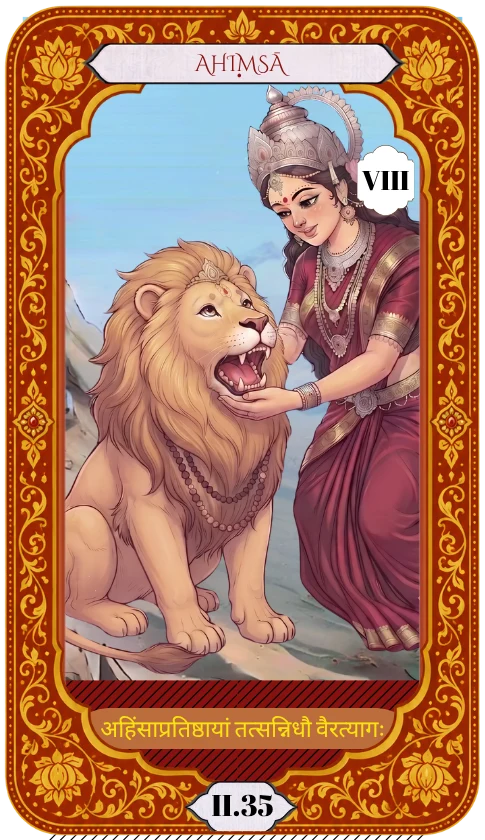
Ahiṃsā (Non-Violence II.35)
Major Arcanum: Strength
Ahiṃsā (II.35) — before one who is settled in non-violence, hostility ceases.
Real strength is gentle. Meet a hard moment today with calm and kindness.
What Ahiṃsā is
Ahiṃsā is usually translated as non-violence, but the word is more precise than that. Hiṃsā is the urge to wound; the "a" in front cancels that urge. It is not only about avoiding the fight: it is about not carrying the wish to hurt, neither against others nor against yourself. Someone who only holds back their hand is still at war inside. Ahiṃsā is when the war ends, and that is why it is the first agreement in Yoga, not the easiest one.
In the sutra
Patañjali opens the list of yamas with it and comes back to the subject in II.35 to speak about the effect, not the rule: near someone steady in ahiṃsā, hostility comes undone. The sequence runs one way only — first the inner state, then the change around it. The sutra does not promise that nobody will attack you. It says the fight loses what holds it up.
How it shows up
On the mat, violence almost never looks like violence. It is pushing the knee a little further so the shape comes out, holding your breath to get through it, measuring your body against the one next to you. All of that is hiṃsā in small doses, and the body sends the bill later. Ahiṃsā in class is stopping an inch short of where stubbornness wants to go.
Off the mat, it shows up in the tone of voice. In the answer you had ready before the other person finished the sentence. In driving in a hurry. And in how you talk about yourself when you get something wrong: for a lot of people, the person treated worst all day is themselves.
Why this card
Strength in the tarot shows a woman opening a lion's mouth with both hands, no weapon and no strain. The lion was not beaten: it was calmed. That is the exact picture of ahiṃsā. The strength in this card is not the kind that dominates, it is the kind that does not need to. Anyone who has to shout to be heard has not reached it yet.
Today
Pick a situation where you usually answer on the spot: a message, a criticism, someone running late. When it turns up, wait three breaths before you reply. This is not swallowing what you feel, it is choosing the answer instead of being chosen by it. Notice what changes on the other side.