Prāṇāyāma (Regulating the Breath II.49)
Major Arcanum: Temperance
Prāṇāyāma (II.49) — the flow of the breath, watched and regulated.
Look for rhythmic balance. Spend five minutes on conscious breathing, in and out for the same length of time.
What Prāṇāyāma is
Prāṇāyāma is made of two words: prāṇa, the breath that keeps the body going, and ayāma, to stretch, to give length. Some read the second part as restraint. Both readings work, because the thing itself is the same: changing the size of the breath on purpose. It is not breathing deep until your head swims. It is taking something that has run by itself your whole life and, for a few minutes, steering it. Measure, not force. Anyone clamping the breath to get the exercise right has already lost the exercise.
In the sutra
II.49 carries a condition almost everyone skips: prāṇāyāma comes after āsana, the seat, is steady. First the body stops complaining, then you touch the breath. And what Patañjali describes is the interruption of the movement in and out — the gap, not the volume of air. The sutra's measure is the pause. Sitting crooked and starting to count beats is doing the second step without the first.
How it shows up
The breath is the first thing to lie to you on the mat. You go into a hard posture and it disappears, with no warning. Then it comes back short, through the mouth, late. And while the counting of beats turns into a competition, the pause does not exist — and the pause is what the sutra asks for, not a full chest.
Through the rest of the day, notice what the air does when a certain name shows up on your phone screen: it stops before you have decided anything. Watch how you eat when you are alone and in a hurry, or how you talk without breathing to the end of a sentence, cutting off the person beside you. The body gives your state away long before you admit you are in it.
Why this card
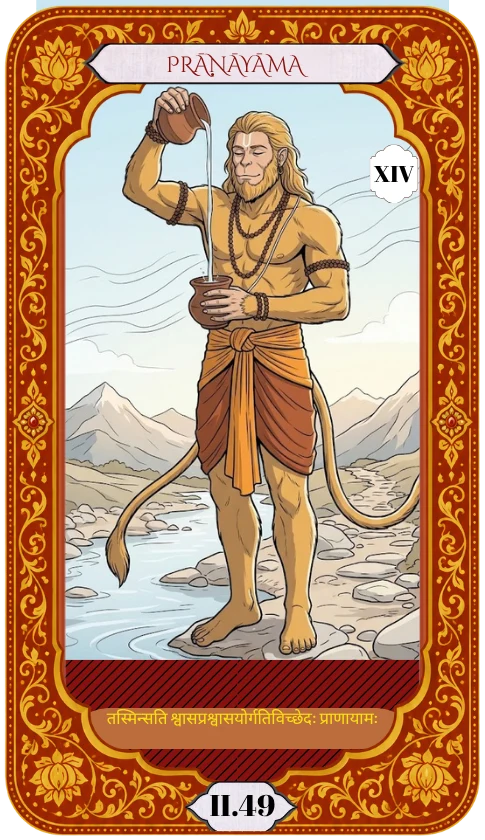
Temperance shows an angel pouring water from one vessel into another, in mid-air, without spilling. The thread of water between the two is a picture of what happens between breathing in and breathing out. Neither vessel matters more; what matters is that the thread does not break. If the angel hurries the hand, the floor gets wet. Prāṇāyāma is that hand: firm enough to steer, light enough not to spill.
Today
Three times today, before you answer the phone, let the air go all the way out and wait for the body to ask for the next one on its own. Nothing held, no numbers counted. Just do not trample the way out. Notice whether the shoulder drops with it. If a yawn comes, let it come: that is the body finding the measure you were not giving it.